There is a phrase that has quietly replaced “Have a nice day” in our culture:
“Be safe!”
People say it kindly. They mean well.
I don’t correct them. I don’t roll my eyes (usually).
But among a few close friends, it has become… a running joke.
My friends know I bristle on the inside when someone ends an interaction with a cheery “Be safe!” And because they know this, they say it to me. Often.
And I respond with:
“Nope! I’m gonna drive like a crazy person.”
It’s obviously sarcasm. I buckle my seatbelt. I obey traffic laws. I look both ways. I am not reckless. I don’t even speed.
But the joke is just a thin veil over the truth. I absolutely HATE that “Be safe!” has become so prevalent because the phrase itself reveals something deeper about how we as a culture think now.
Because safety has quietly become a substitute for peace.
We live in an age obsessed with risk management.
We are taught—subtly and constantly—that:
• if we follow the right rules
• take the right precautions
• listen to the right experts
• make the right choices
then we can guarantee outcomes, avoid pain, suffering, and loss, and live lives of perpetual ease and comfort. But that is not reality and on some level we know it.
Certainly Scripture has never promised that.
“You don’t even know what tomorrow will bring—what your life will be! For you are like smoke that appears for a little while, then vanishes.”
James 4:14
The Bible does not offer us control. It offers us trust.
And those are not the same thing.
Biblical wisdom does not worship safety. Biblical wisdom does not make us responsible for controlling outcomes.
The world’s wisdom says:
- Avoid suffering.
- Minimize risk.
- Protect yourself above all else.
Biblical wisdom says things like:
“For whoever wants to save his life will lose it, but whoever loses his life because of Me will find it.”
Matthew 16:25
“Don’t fear those who kill the body but are not able to kill the soul; rather, fear Him who is able to destroy both soul and body in hell.”
Matthew 10:28
“Though I walk through the valley of the shadow of death, I will fear no evil, for You are with me.”
Psalm 23:4
That is not a safety message. That is a presence message.
God does not promise: “Nothing unwanted will happen to you.”
He promises: “I will be with you when it does.”
Our culture pushes us to obsess over keeping ourselves and those we love safe at all times. Not just from physical harm, but also from even minor disappointment or emotional distress. How much of your anxiety is rooted in worry about your own safety—or your children’s? Physical. Spiritual. Financial. Relational. How much time and money do you spend trying to prevent anything bad from happening or making sure that if it does, it won’t cause you any inconvenience or expense?
Now, I’m not suggesting you discard all considerations of risk, but I am offering a bit of a counter-cultural take on how to weigh it.
Things like insurance, seat belts, preparation, helmets, hand sanitizer, various kinds of “screenings”, “drills”, and other things are tools we can use to appropriately steward the bodies and provision from the Lord but tools are not gods. They can and will fail and they are not meant to become our masters or to replace our trust in God.
I do not reject precautions. I reject faith in precautions.
I lock my door. I wear my seatbelt. I look both ways before I cross the street. I don’t drink and drive. I use common sense.
But I do not believe those things make me secure.
Because a seatbelt can save your life… or break your ribs. Insurance can cost you more than the potential disaster you’re insuring against. A helmet can protect your skull or impede your view of obstacles.
“A horse is prepared for the day of battle, but victory comes from the Lord.”
Proverbs 21:31
Preparation is not sovereignty. Wisdom is not control. Precautions are not promises.
Avoiding suffering is not the highest goal of the Christian life. Obedience and submission to the sovereign Creator God is.
One way I overcame my fear of disaster, obsessive need for control and the accompanying anxiety was to learn this truth. Not everything uncomfortable is bad.
One of the great lies of modern thinking is:
Everything unpleasant, painful, or difficult should be avoided at all costs. It is irresponsible not to prepare for or prevent every possible disaster.
But Scripture says:
“We know that all things work together for the good of those who love God: those who are called according to His purpose.”
Romans 8:28
Not all things feel good. But discomfort is not the same as harm.
The delay that frustrated you may have spared you from something worse.
The illness that slowed you may have redirected you.
The loss that shattered you may have saved you.
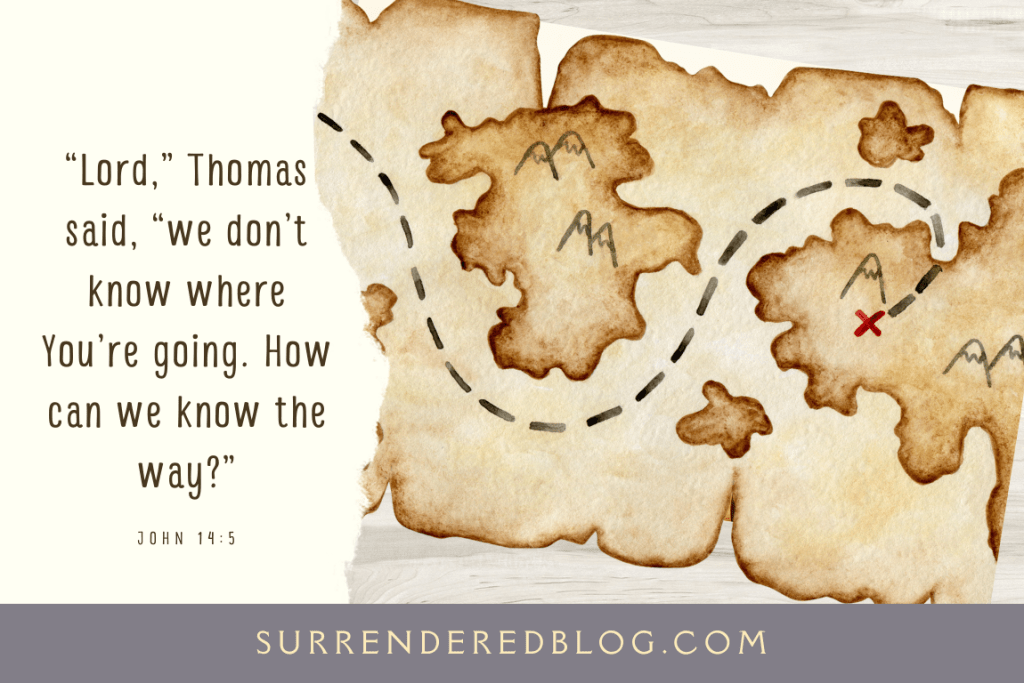
We cannot see the full map.
We are not meant to.
So when someone says, “Be safe,” I cringe.
Because I know that they mean: “I hope you make sure that nothing bad happens to you.”
And I appreciate that they mean to wish me well.
But what I actually live by is this:
“The course of my life is in Your power…”
Psalm 31:15
Not in my precautions.
Not in my planning.
Not in modern consensus.
Not in statistical probability.
In His power.
Which means I can:
- drive without anxiety
- live without obsession
- choose wisely without fear
- and accept what comes without despair
Because safety was never the promise.
Faith was.
So instead of “Be safe,” I think I prefer something older:
“The Lord bless you and keep you.”
Numbers 6:24
Not:
“Nothing will touch you.”
But:
“Nothing will touch you outside of His care.”
And that…
is better than safety.



 a surrendered life